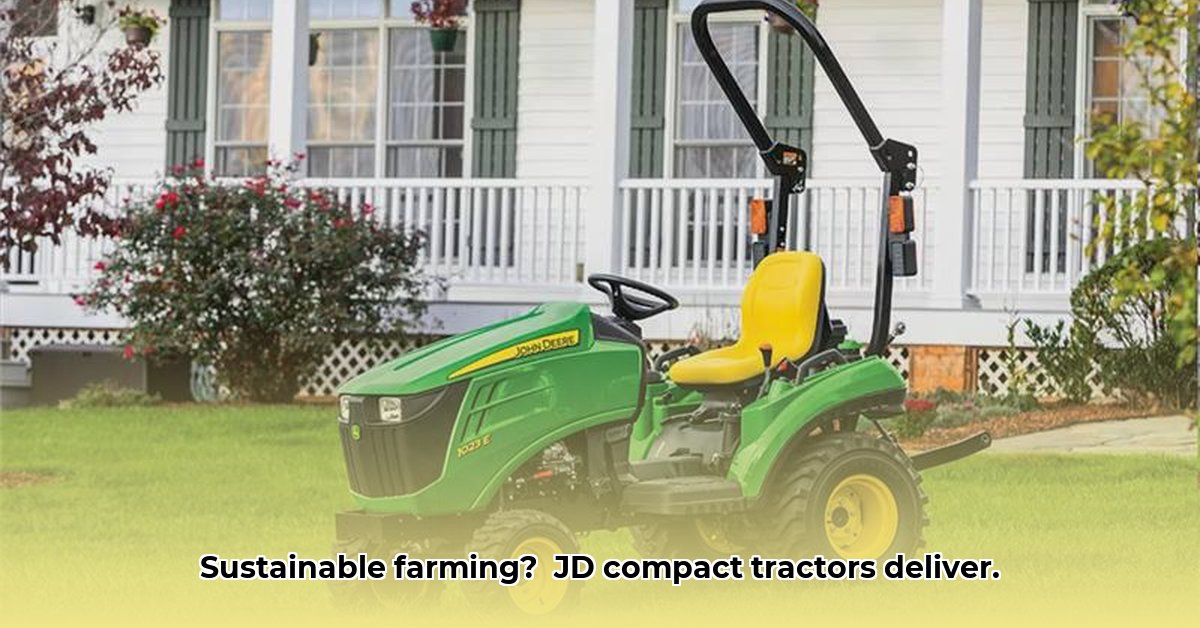
Choosing the right equipment is crucial for efficient and sustainable farming. John Deere's compact tractors, specifically the 1, 2, 3, and 4 Series, offer a range of options to help you achieve your goals. This detailed review and instructional guide will help you navigate the selection process and choose the perfect tractor for your needs. For more information on a specific model, check out this John Deere 210 review.
Power and Precision: Finding Your Perfect Tractor Match
Selecting a John Deere compact tractor is akin to choosing the right tool for a specific job. The 1 Series is ideal for smaller properties and lighter tasks, such as maintaining a small orchard. Conversely, the 4 Series, with its increased horsepower, is better suited for larger-scale operations like tilling extensive fields. All models feature a smooth-running hydrostatic transmission. But how do you determine the optimal tractor for your sustainable farming operation? Careful consideration is key.
Sizing Up Your Farming Operation: What Do You Really Need?
Before considering pricing, thoroughly assess your tractor's intended functions. Will it primarily be used for tilling, mowing, hauling, or a combination of tasks? The size of your land directly correlates to the required horsepower. Do you anticipate needing specialized attachments, such as a front-end loader or a post-hole digger? Ensuring tractor compatibility with your necessary implements is paramount. Furthermore, don't overlook the budget. The initial purchase price is only a portion of the overall cost. Factor in long-term maintenance, fuel expenses, and potential repairs.
The Green Factor: Fuel Efficiency and Environmental Impact
Sustainable farming prioritizes minimizing environmental impact. While John Deere tractors are renowned for user-friendliness, detailed fuel efficiency and emission data are crucial for a comprehensive sustainability assessment. This includes specific fuel consumption rates (gallons per hour) for each model, along with greenhouse gas emissions (CO2 and NOx). This data allows for comparisons with other brands and helps determine the long-term environmental impact. Further research is needed to fully understand the tractors’ environmental impact, including the potential use of biofuels and the contribution to carbon sequestration through soil management practices.
The Long Game: Cost-Benefit Analysis and Return on Investment
Sustainable farming demands financial prudence. Don't solely focus on the upfront cost. Analyze long-term expenses—repair frequency, parts costs, and fuel consumption over the tractor's lifespan. Conduct a thorough cost-benefit analysis, comparing the total cost of ownership and operation of a John Deere compact tractor to the costs of manual labor or renting equipment. This detailed analysis will determine the true return on investment (ROI) and ensure it aligns with your long-term sustainability goals.
Soil Health: A Key Element of Sustainable Farming
Soil compaction is a significant concern for sustainable agriculture. Heavier tractors can compact the soil, reducing water and nutrient absorption, negatively affecting plant health and productivity. To mitigate this risk, consider lighter-duty models for more delicate soil types. Combine tractor use with other soil management techniques to maintain soil health. Precision agriculture techniques, like variable-rate fertilization, offer further benefits but require compatible precision farming software. Confirming this compatibility beforehand is crucial for optimizing fertilizer use and reducing environmental impact.
Your Step-by-Step Guide to Choosing the Right Tractor
Follow these steps for a smooth selection process:
- Assess your needs: Evaluate the tasks and land size.
- Set a budget: Include purchase price, maintenance, fuel, and repairs.
- Research models: Compare horsepower, features, and implement compatibility across the John Deere 1-4 Series.
- Consider environmental impact: Research fuel consumption and emissions.
- Seek expert advice: Consult your local John Deere dealer and other farmers.
- Test drive: If possible, test drive in similar conditions to your own.
- Make your decision: Choose the tractor that best aligns with your goals and budget.
Weighing the Pros and Cons: A Balanced View
The following table summarizes the advantages and disadvantages:
| Feature | Pros | Cons |
|---|---|---|
| Ease of Use | User-friendly controls, smooth hydrostatic transmission | May lack advanced features of larger models |
| Versatility | Compatible with a wide range of implements | Availability and cost of specialized implements may vary |
| Maneuverability | Excellent maneuverability for smaller spaces | May struggle in extremely challenging terrain |
| Power Options | Various horsepower options to suit needs | Higher horsepower models have a greater potential for soil compaction |
| Environmental Impact | Generally fuel-efficient compared to larger tractors | Comprehensive emissions data and long-term sustainability information is still emerging |
Remember, sustainable farming is an ongoing process. Choosing the right John Deere compact tractor is a crucial step, but it's one component of a broader strategy. Meticulous planning, thorough research, and a long-term vision will ensure your investment supports your goals and contributes to a healthier environment.